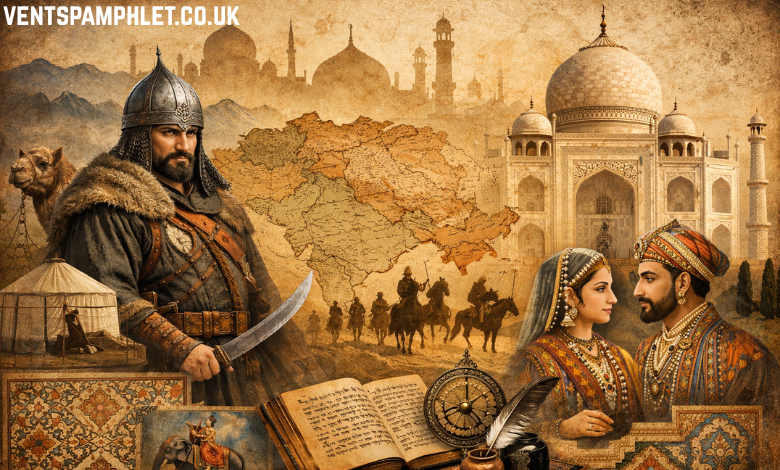
Turaska: Unveiling the Cultural Impact and Historical Legacy of Turkic Tribes in South Asia

Introduction
Turaska, though a term deeply rooted in history, is not widely recognized in modern language or popular discourse. Its origin and evolution reflect a significant period in the annals of human history, particularly in the Indian subcontinent and Central Asia. What is remarkable about the word “Turaska” is not only its association with specific tribes or regions but also its role in shaping historical narratives, cultural exchanges, and identity formations.
What Is Turaska
Turaska is a term with ancient origins, frequently mentioned in religious and epic texts. Its significance lies not merely in its historical context but also in how it reflects the interplay between culture, identity, and invasions. The term initially emerged to denote tribes and groups that were considered non-Vedic by ancient Indian societies. These groups, particularly the Turkic invaders, were often viewed as outsiders. Over time, however, as these invaders assimilated into the local culture, they began to contribute to shaping the societal and political landscape, which led to the evolution of the term itself.
The earliest appearances of “Turaska” can be traced back to Sanskrit literature, where it appeared in epics and poems that chronicled the history of ancient India. The term was used to describe people from distant lands—tribes and communities often associated with the Turkic or other non-Vedic origins, including various nomadic tribes from the steppes of Central Asia.
The Rise of Turaska: From Invaders to Cultural Influencers
In the early stages of its use, Turaska primarily referred to the invading tribes that ventured into India. These tribes were often seen as outsiders or enemies by the native Vedic societies. However, as time passed, these groups began to carve out a place for themselves, gradually shifting from adversaries to rulers and patrons of the land.
One of the most well-known groups associated with the term Turaska are the Turkic tribes. The Turkic people, known for their military prowess, began to rule over large parts of Central Asia, and later, parts of India. As their influence grew, their culture, language, and traditions began to seep into the local Indian fabric. The Turkic invaders, particularly those who established the Delhi Sultanate and the Mughal Empire, significantly shaped the course of Indian history, leaving a lasting legacy on architecture, administration, and culture.
The Cultural Significance of Turaska
The importance of Turaska lies not just in the realm of politics and military conquest but also in its profound cultural impact. Over time, the invaders who were once viewed as foreigners began to blend their culture with that of their conquered lands, giving rise to new cultural forms that enriched the Indian subcontinent.
In literature, Turaska is associated with several epic stories and poems. Ancient texts used the term to not only describe the people but also their unique lifestyle, art, and contributions to the broader world. The merging of Vedic traditions with Turkic customs created a rich, hybrid culture, evident in the art, architecture, and even culinary traditions of the time. These cultural developments continue to influence various aspects of Indian life today.
Turaska and Its Role in South Asian History
The role of Turaska is particularly prominent in the historical context of South Asia. Indian texts, especially those from the medieval period, referred to Turaska when discussing foreign tribes and their interactions with Indian society. These references were crucial in understanding how ancient Indian civilizations viewed the world outside their borders.
The term also highlights the interactions between India and its neighboring regions, especially the lands to the northwest. The Persian, Mongol, and Turkic people who came into contact with India left their imprint on the subcontinent. These foreign groups brought with them not only new military techniques and political structures but also fresh ideas about art, literature, and religion.
For example, the Delhi Sultanate and later the Mughal Empire, both of which had strong Turaskic roots, introduced Persian art, literature, and architectural styles to India. The iconic Mughal gardens, the development of Indo-Islamic architecture, and the flourishing of Urdu literature are all examples of the lasting cultural exchanges made possible by these Turaskic invaders.
Turaska and Art: The Cultural Expressions
The influence of Turaska can also be traced in the visual arts. Many artistic styles, architectural elements, and design motifs that are found across Central Asia, the Middle East, and South Asia show the traces of Turaska. The amalgamation of local Indian art with Turaskic designs created new forms of artistic expression.
For instance, Mughal architecture, with its grand domes, arches, and intricate patterns, was heavily influenced by Persian and Central Asian designs. The use of flowing lines, geometric patterns, and vibrant colors in Mughal art and architecture, which became a hallmark of the period, showcases the deep connection between Turaska and the cultural landscape of India.
In addition to architecture, Turaska’s influence can also be observed in the visual arts of the period. Persian miniatures, for example, found their way into Indian art forms, leading to a flourishing of intricate paintings. These works not only depicted historical events but also conveyed the fusion of cultural traditions, symbolizing the blend of Vedic and Turaskic influences.
The Linguistic Influence of Turaska
Linguistically, the impact of Turaska is also significant. The Turkic-speaking invaders brought with them their own languages, which eventually gave rise to new dialects and forms of communication in India. One of the most enduring legacies of the Turaska influence on language is the development of Urdu.
Urdu, which emerged during the Mughal era, is a fusion of Persian, Turkish, and local Indian languages. It became a lingua franca of the Mughal Empire, spoken by people of various ethnic and cultural backgrounds. The development of Urdu poetry, literature, and its eventual rise as a major language of South Asia can be attributed to the cultural and linguistic exchanges facilitated by the Turaska influence.
Modern Perspectives on Turaska
In contemporary scholarship, Turaska is examined from a variety of perspectives. Scholars studying the linguistic, cultural, and political history of South Asia often refer to Turaska as a term that helps to understand the complexities of identity and cultural exchange. Some researchers focus on the impact of Turaska on South Asian art, while others investigate how it shaped the political and administrative structures of medieval India.
Modern historians also use the term to explore the ways in which different empires and states interacted with each other. The Turaska legacy is studied not only in the context of the Indian subcontinent but also in a broader Central Asian and Middle Eastern context. These studies help trace the movements of people, goods, and ideas across continents and offer valuable insights into the early globalization of culture and trade.
The Modern Relevance of Turaska
Although Turaska may no longer be in everyday use, its influence continues to resonate in the cultures and societies shaped by its legacy. The architectural styles, artistic traditions, and even the languages that evolved from Turaska’s influence are integral parts of South Asian culture today. From the poetry of Mirza Ghalib to the stunning palaces of Rajasthan, the echoes of Turaska are still evident.
Moreover, the study of Turaska offers important lessons about cultural assimilation, the blending of identities, and the ways in which different peoples can coexist and enrich one another. Understanding Turaska’s place in history can help modern societies appreciate the value of cultural exchange and the shared heritage that transcends borders and conflicts.
Conclusion
Turaska is a word that represents more than just an ancient term used in texts. It is a symbol of the cultural and historical transformations that shaped not only India but also Central Asia and the wider world. From its initial association with invaders to its eventual integration into the cultural fabric of South Asia, Turaska has played a crucial role in the development of art, language, and political structures. Today, the legacy of Turaska continues to be felt, and its story remains an essential part of understanding the diverse and interconnected world we live in.
FAQS
What is the meaning of Turaska?
Turaska is an ancient term used to describe non-Vedic tribes, particularly the Turkic invaders, and their cultural influence in India.
How did Turaska influence Indian culture?
Turaska shaped Indian culture through art, architecture, language, and literature, blending Turkic and Indian traditions.
What role did Turaska play in South Asian history?
Turaska referred to invaders and cultural patrons, leaving a lasting impact on India’s political and artistic landscape.
Is Turaska related to the Mughal Empire?
Yes, Turaska influenced the Mughal Empire, particularly in architecture, language, and the fusion of Persian and local styles.
How does Turaska connect to modern languages like Urdu?
The term Turaska and its associated Turkic tribes played a significant role in the development of the Urdu language.